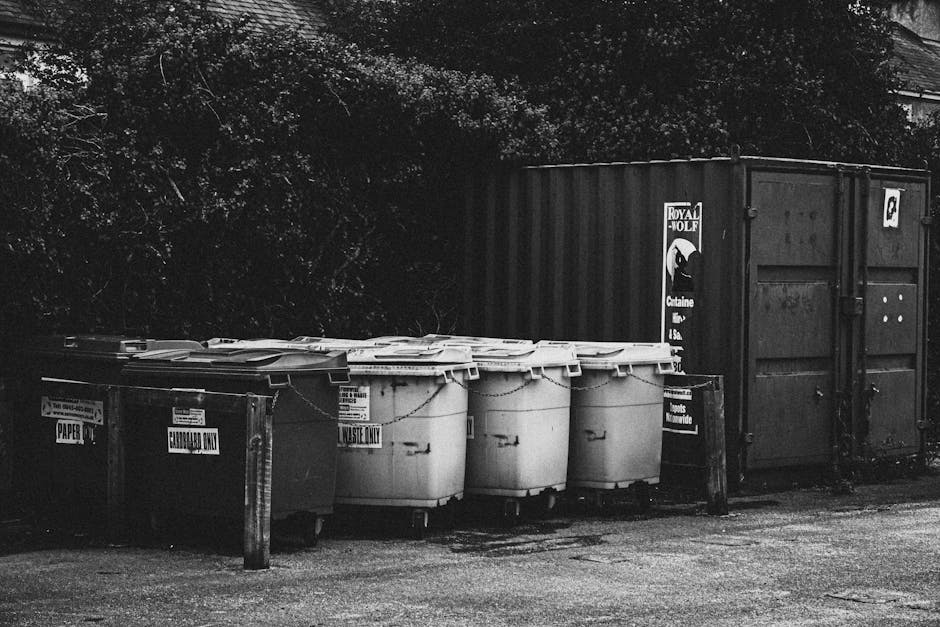
Brigstock Road rubbish collection for tight access homes
If you live on Brigstock Road and your home has awkward access, you already know the headache: narrow side paths, shared entrances, a tight front garden, maybe a flight of steps, and nowhere sensible to leave a pile of rubbish without it becoming a nuisance. Brigstock Road rubbish collection for tight access homes is really about finding a clean, safe way to clear waste without turning the whole job into a wrestling match. The good news? With the right plan, tight-access properties are absolutely manageable.
This guide breaks down how collection usually works, which waste-removal methods suit restricted access, what to check before booking, and how to avoid the classic problems that slow everything down. If you are weighing up options, you may also find it useful to compare local waste solutions such as rubbish removal, wait and load skip hire, and grab hire services as you work out what fits your property best.
Quick takeaway: tight access does not automatically rule out rubbish collection. It simply changes the method. In many cases, a smaller load plan, wait-and-load approach, or manual collection is more practical than trying to squeeze a standard skip into a space that was never designed for one.
Table of Contents
- Why Brigstock Road rubbish collection for tight access homes Matters
- How Brigstock Road rubbish collection for tight access homes Works
- Key Benefits and Practical Advantages
- Who This Is For and When It Makes Sense
- Step-by-Step Guidance
- Expert Tips for Better Results
- Common Mistakes to Avoid
- Tools, Resources and Recommendations
- Law, Compliance, Standards, or Best Practice
- Options, Methods, or Comparison Table
- Case Study or Real-World Example
- Practical Checklist
- Conclusion
- Frequently Asked Questions
Why Brigstock Road rubbish collection for tight access homes Matters
Tight access changes everything. A collection that would be straightforward on a wide suburban driveway can become fiddly on a busy road with limited kerb space, narrow entrances, or shared access. On streets like Brigstock Road, the real challenge is not just getting rid of waste; it is doing it without blocking neighbours, risking damage, or causing delays that drag the whole day out.
That matters for three reasons. First, time. If waste is left sitting around because the collection method is wrong, the mess stays visible longer than it should. Second, safety. Heavy items left in a cramped hallway or on a narrow path can be awkward, and awkward is where knocks and trips happen. Third, neighbour relations. Let's face it, nobody wants a row over a wheelie bin, a bulky wardrobe, or a skipped collection time that ends with a car trapped behind your pile of rubble. Not ideal.
There is also a practical money angle. Choosing the wrong method can mean extra handling, permit complications, wasted labour, or the need to rebook. A more access-friendly approach often saves hassle even if it looks a little less "traditional" than dropping a standard skip out front.
If you are planning bigger property work, the same thinking applies to related services like house clearance, garage and loft clearance, and site clearance. Tight access homes are usually about smart sequencing, not brute force.
How Brigstock Road rubbish collection for tight access homes Works
In simple terms, the process begins with understanding access, then matching the waste to the right removal method. For a tight-access property, the collection team usually wants to know how wide the entrance is, whether there are steps, whether there is a shared alley, whether parking is nearby, and how far items need to be carried. Small details. Big difference.
Here is how it normally works in practice:
- Assessment of access - You explain the layout of your home, front path, driveway, side return, gate, or any narrow point that might matter.
- Waste description - You say what you need removed: general rubbish, mixed household waste, bulky furniture, renovation debris, garden waste, or a combination.
- Method selection - The team recommends a collection style that fits, such as manual loading, a small vehicle, man and van, wait and load skip hire, or grab lorry hire.
- Timing plan - A slot is arranged so waste can be moved when access is least disruptive. On busy roads, timing can matter more than people expect.
- Collection and loading - Items are removed carefully, often from the front room, hall, garden, or a pre-staged area.
- Sorting and disposal - Reusable, recyclable, and non-recyclable materials are separated where possible, with restricted items handled separately.
The main idea is this: tight access homes benefit from flexible collection, not rigid "one-size-fits-all" disposal. In some cases, a smaller vehicle is enough. In others, a team needs to collect from inside the property or from just outside the front door. Simple, but not always easy.
For homeowners who are clearing a mix of bulky items and general waste, it is worth checking guidance on what can go in a skip even if you ultimately choose a no-skip solution. Understanding what is acceptable helps avoid awkward last-minute surprises.
Key Benefits and Practical Advantages
The biggest benefit is obvious: you get the waste removed without having to redesign your driveway. But there is more to it than that. For tight-access homes, a good collection plan can make the whole job feel surprisingly calm. Almost civilised, even. Which is not a word people often use about rubbish.
- Less disruption - No need for a huge container taking over the road or blocking a narrow frontage.
- Better access fit - Smaller vehicles and manual loading are often easier around steps, gates, and limited parking.
- Lower risk of damage - Fewer heavy manoeuvres near walls, paving, fences, and parked cars.
- Faster site reset - Waste can be removed in one visit or in a shorter window, leaving the property usable sooner.
- More control over loading - You can stage items in a sensible place, then remove them all together.
- Flexible for mixed waste - Household clutter, garden cuttings, old furniture, and light renovation debris can often be handled in one plan.
There is also peace of mind. If you are trying to clear a property between tenancies, before a sale, or after a refurbishment, access-friendly collection reduces the panic that can creep in when the waste starts to pile up. You look out the window at 8am, see the narrow entrance, and think: right, this is going to be one of those days. It does not have to be.
For waste streams that need special handling, such as bulky white goods or awkward furniture, support services like fridge and appliance removal and mattress and sofa disposal can be especially useful. They reduce the need to wrestle one large item at a time through a tight hallway.
Who This Is For and When It Makes Sense
This kind of collection is ideal for people who cannot easily use a standard skip because the property layout simply gets in the way. That could be a terraced house with a narrow front path, a maisonette with shared access, a small forecourt, or a home with limited or awkward parking nearby.
It also makes sense if you are dealing with a one-off clear-out rather than an ongoing project. For example:
- you are clearing out a loft or spare room before decorating
- you have bulky waste from a small refurbishment
- you are emptying a garage that has become a bit of a time capsule
- you need a quick collection after a garden tidy-up
- you have a probate or house sale deadline and want the waste gone fast
For commercial or repeated work, there may be better options depending on volume and access. A business with regular waste might look at commercial skip hire, while a building contractor may lean towards builders waste removal or construction waste disposal. Tight access does not just affect homes; it affects all sorts of jobs.
Truth be told, this is also a good fit for anyone who values simplicity. If you do not want a container sitting outside for days, or you are concerned about permits and kerbside restrictions, a collection-based approach can be much easier to live with.
Step-by-Step Guidance
If you want the job to go smoothly, the best approach is to prepare before the team arrives. Nothing dramatic. Just a few sensible steps that make the day run better.
- Walk the access route
Start at the road and follow the path waste will need to travel. Look for tight corners, low walls, steps, overgrown plants, loose paving, or anything that might snag a bulky item. - Separate what is definitely going
Keep rubbish, reusable items, and items you still need in different places. It sounds basic, but in a rushed clearance everything starts to blur together. - Check for restricted items
Paints, chemicals, sharps, and certain electrical items may need different handling. If you are not sure, ask before the day rather than after the van is already there. - Measure bulky items if needed
A rough width and height can help if you have wardrobes, tables, or white goods to remove. No need for engineering precision, just enough to avoid surprises. - Plan parking and timing
On Brigstock Road, parking and traffic can shape the whole collection. If there is a time of day when access is easier, use it. - Choose the right collection method
For smaller loads, a direct collection may be best. For awkward access, a man and van arrangement or wait and load setup is often more practical than a standard skip. - Keep a clear path on the day
Move shoes, planters, bikes, and bins out of the way. It saves time and reduces the risk of little knocks. - Ask for recycling guidance
Where possible, sort recyclable material in advance. That helps the team work faster and supports better waste recovery.
If you are trying to clear an entire property, this step-by-step approach works especially well alongside related services like garage and loft clearance or house clearance. It turns a messy, open-ended problem into a manageable sequence.
Expert Tips for Better Results
A few small habits can make a tight-access collection dramatically easier. These are the sorts of things that do not look important until you skip them, then suddenly they are very important.
1. Stage waste close to the exit, but not in the exit. Leave enough room for people to move safely. A narrow hall stacked to the ceiling is not a plan; it is a trap.
2. Avoid mixing very different waste types. Mixed rubbish is common, but keep hazardous items separate. If you have anything you suspect needs special handling, check first. For example, some jobs may need hazardous waste disposal instead of ordinary rubbish collection.
3. Think in layers, not piles. Heavy objects should sit where they can be reached first. Light, crushable waste can go on top or be bagged separately.
4. If access is really tight, use a manual-loading plan. It is slower than a huge bin drop, but often cleaner and less stressful. Slow can be smart.
5. Ask about recycling practices before booking. A provider with clear recycling and sustainability commitments is usually thinking beyond simple disposal, which is a good sign.
6. Be realistic about volume. People often underestimate the amount of rubbish a room can generate. One bedroom "tidy-up" can become two loads very quickly. Happens all the time.
7. Keep documents and valuables out of the work zone. This is especially useful during clearances, loft jobs, and office-style waste removal. If paperwork is involved, consider confidential shredding rather than tossing sensitive files in with general waste.
Common Mistakes to Avoid
The most common mistake is booking a collection without describing the access properly. A narrow entrance is not a small detail. It is often the whole issue. If the team turns up expecting a normal frontage and finds a cramped alley, everyone loses time.
Other mistakes crop up again and again:
- Leaving everything until the last minute - Tight access jobs need a little more preparation.
- Assuming any method will fit - Not every property is suitable for a standard skip, and that is fine.
- Ignoring parking restrictions - A perfect collection plan can still be undermined by a bad parking decision.
- Mixing banned items with general rubbish - This can delay the collection or require a second arrangement.
- Overfilling bagged waste - Heavy, split bags slow everything down and create messy handling.
- Forgetting about neighbours - Shared access needs courtesy. A quick heads-up can prevent friction.
There is also the classic "it will only take five minutes" assumption. Sometimes it does. Sometimes it really does not. A realistic view saves everyone a bit of grief.
Tools, Resources and Recommendations
You do not need specialist equipment for most tight-access collections, but a few simple tools help a lot. The aim is to make the waste easier to move, safer to handle, and easier to sort.
- Heavy-duty rubble sacks for small, manageable loads
- Reusable boxes or crates for mixed household items
- Basic tape measure to gauge gates, doorways, and bulky items
- Gloves and closed footwear for anyone helping with pre-loading
- Labelled piles for keep, recycle, and remove
For larger or more awkward loads, professional help is usually the better recommendation. If the access is tight but the waste is manageable, domestic skip hire may still be possible in some cases, but it depends heavily on frontage and placement rules. For many Brigstock Road properties, access-friendly collection services are simply easier.
It can also help to look at pricing and service options in advance rather than trying to compare everything on the day. Pages such as skip sizes and prices and pricing and quotes give you a better sense of what sort of service level fits your waste volume and access constraints.
Law, Compliance, Standards, or Best Practice
For householders, the main thing is to make sure waste is handled by a proper operator and disposed of responsibly. In the UK, waste duty of care principles mean you should be careful about who takes your rubbish, where it goes, and whether it is handled lawfully. You do not need to become a waste-law expert, but you do need to be sensible.
Best practice usually includes:
- separating hazardous and non-hazardous waste
- avoiding unsafe manual handling
- keeping access routes clear
- using the right collection method for the property
- checking whether a permit may be needed for roadside placement
If a skip would need to go on public highway space, permit considerations may apply. That is where services such as skip hire permits or skip permits become relevant. But for many tight-access homes, avoiding the permit question entirely is one reason to choose a collection-led approach.
It is also sensible to use a provider that takes safety seriously. Pages like health and safety policy, insurance and safety, and payment and security can offer a clearer picture of how the company operates. Not glamorous, but important. Very important, actually.
Options, Methods, or Comparison Table
For Brigstock Road properties with tight access, the best method depends on volume, access width, item type, and how quickly you need the waste gone. Here is a practical comparison.
| Method | Best for | Strengths | Limitations |
|---|---|---|---|
| Man and van | Small to medium loads, mixed household waste | Flexible, access-friendly, good for awkward properties | May require more sorting or multiple trips for larger jobs |
| Wait and load | Homes where roadside placement is difficult | No long-term container on site, fast turnaround | Needs you to be prepared before arrival |
| Grab lorry hire | Loose waste, heavier debris, larger clearances | Efficient for substantial loads where access allows reach | Needs enough space for vehicle operation and safe loading |
| Domestic skip hire | Properties with workable frontage or drive access | Useful for ongoing DIY jobs and larger volumes | Can be limited by access, parking, or permit requirements |
A simple rule of thumb: if the route to your property is tight, cluttered, or awkward, flexibility usually beats size. If you have a clear loading point and plenty of room, a more traditional skip option may still work. And if you are unsure, ask for an access assessment before you commit.
For trade waste, the balance may shift. Construction projects sometimes suit builders skip hire or construction waste clearance, while demolition jobs may need more specialised handling through demolition waste removal. Different job, different rhythm.
Case Study or Real-World Example
Picture a typical terraced home on Brigstock Road. The property has a narrow front path, a small step at the entrance, and no spare room for a container. The owner has spent a weekend clearing the loft and garage, and by Sunday evening there is a pile of old boxes, broken shelving, a worn-out mattress, and a couple of small appliances. Nothing dramatic, just enough to make the place feel cramped and a bit chaotic.
A standard skip would have been awkward. It might have needed a permit, or it may simply have blocked too much space. Instead, the waste was staged in manageable piles inside the frontage area, with the bulky items kept separate from bagged rubbish. The collection team used a smaller access-friendly method, loaded everything carefully, and the whole space was cleared without the usual drama.
The real win was not just speed. It was the calm afterwards. The entrance was usable again, the hallway was clear, and there was no lingering heap outside to trip over at dusk. A small thing, maybe, but you notice it when the front of your home stops looking like a temporary dump site.
That kind of outcome is exactly why services such as same day skip hire can be worth considering for urgent jobs, and why rubbish removal is often the better fit when access is the main obstacle rather than waste volume.
Practical Checklist
Use this before your collection day. It keeps things tidy and, honestly, saves the little panic moments.
- Confirm how much waste you actually have
- Check the narrowest point on the access route
- Move cars, bins, bikes, and planters out of the way
- Separate hazardous or restricted items
- Bag lighter waste securely
- Keep bulky items visible and reachable
- Ask about the best collection method for a tight frontage
- Confirm whether any permit or parking issue might apply
- Leave a clear path from the waste to the collection point
- Make sure someone is available if decisions need to be made on the day
Useful reminder: the best collection is usually the one that fits the property rather than the one that looks biggest on paper.
Conclusion
Brigstock Road rubbish collection for tight access homes is not about forcing a standard solution onto a difficult property. It is about matching the method to the space, the waste, and the practical realities of the street. When you get that balance right, the whole job becomes simpler, safer, and less disruptive.
If you are dealing with a narrow frontage, awkward steps, shared access, or a property that just does not suit a normal skip, focus on flexibility. Compare the options, ask direct questions, and choose the collection style that makes the least mess and the most sense. That tends to be the winning move, every time.
Get a free quote today and see how much you can save.
And if you are still at the "not quite sure what will fit" stage, that is perfectly normal. A quick, careful plan now can save a lot of stress later, and that small bit of breathing room makes all the difference.
Frequently Asked Questions
What is the best rubbish collection method for tight access homes on Brigstock Road?
It depends on the waste volume and how narrow the access is. For many tight-access homes, man and van, wait and load, or manual rubbish removal is more practical than a standard skip.
Can I still use a skip if my frontage is narrow?
Sometimes, yes. If there is enough room for safe placement and collection, a skip may work. If space is very limited, a skip may be less suitable than an access-friendly collection method.
Do I need a permit for rubbish collection at a tight-access property?
Not always. Permits are usually relevant if a skip or container needs to be placed on public highway space. If waste is collected directly without roadside placement, a permit may not be needed.
How do I prepare for a rubbish collection if my home has steps or a narrow hallway?
Clear the route, group the waste into sensible piles, and keep the path as open as possible. If there are awkward steps or tight turns, let the team know in advance so they can plan properly.
What types of waste are commonly collected from tight-access homes?
General household rubbish, loft or garage clutter, old furniture, garden waste, light DIY debris, and bulky items such as mattresses or appliances are common examples.
Is wait and load better than a skip for Brigstock Road homes?
Often it is, especially where parking is difficult or the frontage is too tight for a skip. Wait and load lets waste be removed quickly without leaving a container on site.
Can large items like sofas or fridges be taken from a tight-access property?
Yes, usually with the right planning. Bulky items may need careful route checks, and specialist services can help with appliances or furniture that need separate handling.
How do I know whether my waste needs special disposal?
If it includes chemicals, paints, sharps, or other potentially hazardous materials, it may need separate handling. If you are unsure, ask before collection day rather than guessing.
Will the collection team carry waste from inside the property?
In many cases, yes, if agreed in advance and if access is safe. This is common for tight-access homes where waste cannot be staged neatly outside.
What should I ask before booking rubbish collection for a tight-access home?
Ask about access requirements, parking, collection method, what can be taken, whether any permit is needed, and whether the team can handle bulky or mixed waste.
Is same-day collection possible for tight-access properties?
Sometimes, yes. If access details are clear and the waste is ready to go, same-day arrangements may be possible, though availability will vary.
How can I keep rubbish collection safe in a narrow space?
Keep the route clear, avoid overloading bags, separate heavy items, and do not leave loose objects where people need to walk. Safe handling matters just as much as speed.
What is the main advantage of using a collection service instead of leaving waste outside?
The main advantage is control. A collection service removes the waste efficiently, reduces clutter, and avoids leaving bulky rubbish sitting outside the property for days.